

Rainy days, busy schedules, or limited outdoor time can make it challenging to keep dogs active and engaged. Without enough stimulation, boredom can quickly lead to restlessness or unwanted behaviors. Mental exercise is just as important as physical activity, helping dogs stay sharp, confident, and content. Finding creative ways to keep your dog entertained indoors can strengthen your bond while supporting their overall well-being in a fun and meaningful way.
Use Scent Games to Engage Their Natural Instincts
Dogs rely heavily on their sense of smell, making scent-based activities one of the most effective ways to provide mental stimulation indoors. Hiding treats around your home encourages your dog to search, explore, and focus on a task that feels natural and rewarding.
Start with simple hiding spots like under cushions or behind furniture, then gradually increase the difficulty as your dog improves. Rotating locations and adding new challenges keep the game interesting. Scent work not only reduces boredom but also helps build confidence, relieve stress, and provide a productive outlet for your dog’s instincts.
Try Puzzle Toys and Interactive Feeders
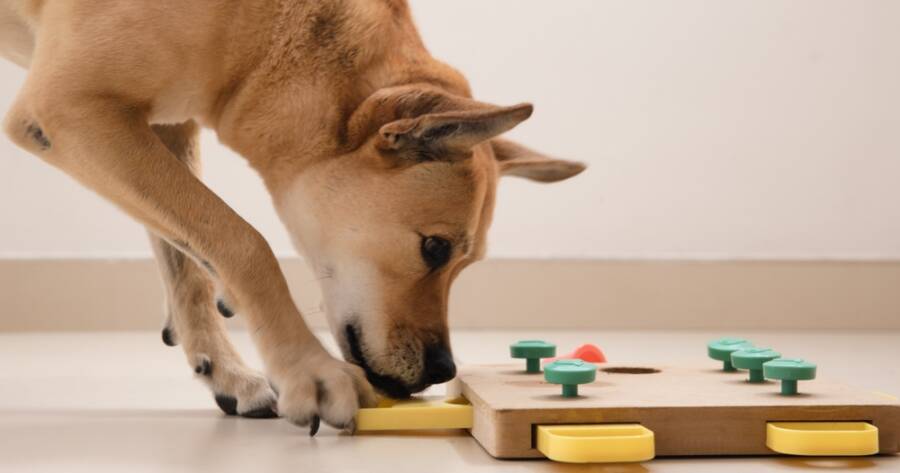
Puzzle toys and interactive feeders are excellent tools for keeping your dog mentally engaged. These toys require problem-solving skills, encouraging your dog to think and work for their reward. This type of enrichment mimics natural behaviors like foraging and hunting.
You can use treat-dispensing balls, stuffed toys, or more advanced puzzles to challenge your dog at different levels. Freezing food inside a toy can extend the activity and keep your dog occupied longer. Interactive feeding slows down eating and adds excitement to mealtime while providing valuable mental stimulation.
Practice Short Training Sessions
Training sessions are one of the most effective ways to stimulate your dog’s mind while reinforcing positive behavior. Practicing commands such as sit, stay, or recall helps maintain focus and strengthens communication between you and your pet.
Keeping sessions short and engaging prevents your dog from becoming overwhelmed. Even five to ten minutes a day can make a noticeable difference. Using rewards and positive reinforcement encourages learning and builds confidence. Regular training keeps your dog mentally active and helps create a well-behaved, attentive companion.
Teach New Tricks and Skills
Teaching new tricks is a fun and rewarding way to challenge your dog mentally. Whether it is learning to shake a paw, roll over, or tidy up toys, new skills require focus, patience, and problem-solving.
Breaking tricks into smaller steps makes learning easier and more enjoyable. Repetition combined with rewards helps reinforce progress and keeps your dog motivated. Introducing new challenges regularly prevents boredom and keeps your dog engaged. Learning new skills also strengthens your bond and provides a sense of accomplishment for both you and your pet.
Create Indoor Games Like Hide and Seek
Interactive games such as hide and seek offer both mental and physical stimulation. Asking your dog to stay while you hide and then calling them to find you creates excitement and encourages focus.
You can also hide toys or treats around the house to create a treasure hunt. Varying the hiding spots and increasing difficulty levels keeps your dog engaged over time. Indoor games provide a fun way to burn energy, improve problem-solving skills, and strengthen your connection through shared play.
Rotate Toys to Keep Things Interesting
Dogs can quickly lose interest in toys that are always available. Rotating toys every few days helps maintain novelty and excitement, making old toys feel new again.
Store a portion of your dog’s toys out of sight and reintroduce them later. Combining toy rotation with interactive play can further increase engagement. Keeping your dog curious about their environment helps prevent boredom and encourages ongoing mental stimulation without needing to constantly purchase new toys.
Set Up a Simple Indoor Obstacle Course
Creating an indoor obstacle course is a great way to challenge your dog both mentally and physically. Using everyday household items like cushions, chairs, and boxes, you can design a course that encourages jumping, weaving, and navigating obstacles.
Start with simple setups and gradually increase complexity as your dog becomes more confident. Guiding your dog through the course using commands and rewards helps reinforce training while adding excitement. Obstacle courses provide a structured activity that keeps your dog engaged and promotes coordination and problem-solving skills.
A Happier Dog Starts With a Stimulated Mind
Keeping your dog mentally stimulated indoors doesn’t require complicated routines or expensive equipment. Simple activities that engage their natural instincts and encourage problem-solving can make a meaningful difference in their daily life. Consistency and variety are key to maintaining interest and preventing boredom.
By incorporating a mix of games, training, and enrichment activities, you can create a balanced routine that supports your dog’s mental and emotional health. A well-stimulated dog is more relaxed, confident, and content, making life at home more enjoyable for both of you.