

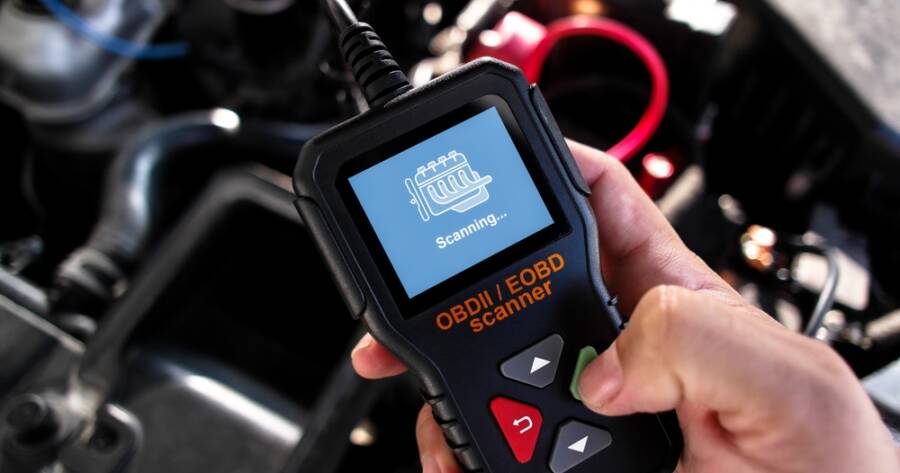
A warning light can turn an ordinary drive into a stressful guessing game. An OBD-II scanner cannot replace a skilled mechanic, but it can reveal the trouble code stored by the vehicle and help an owner decide what to do next. Some scanners provide only basic engine codes, while others check brakes, airbags, batteries, and more. The best choice depends on the vehicle, the desired detail, and whether a phone-based or handheld design feels easier to use.
Top OBD-II Scanners at a Glance
| Scanner | Best For | Connection Type | Key Functions | Main Limitation |
|---|---|---|---|---|
| BlueDriver Pro | Overall home diagnostics | Bluetooth with mobile app | Engine codes, live data, freeze-frame data, emissions checks, and added system coverage on supported vehicles | Requires a compatible phone or tablet |
| ANCEL AD310 | Basic check engine codes | Wired handheld | Reads and clears engine codes, shows live data, freeze-frame data, and emissions readiness | Limited access to non-engine systems |
| FIXD Sensor | Plain-language explanations | Bluetooth with mobile app | Explains engine codes, rates issue severity, stores scan history, and provides maintenance reminders | Some repair guidance and support features require a paid plan |
| Innova 1000 | Broader wireless scanning | Bluetooth with mobile app | Engine, transmission, ABS, airbag, live data, emissions checks, and selected service functions | Available functions vary by vehicle |
| Autel AutoLink AL519 | Emissions readiness checks | Wired handheld | Reads and clears engine codes, graphs live data, checks emissions monitors, and displays test results | Does not provide full access to every vehicle system |
| TOPDON ArtiLink500B | Engine and battery testing | Wired handheld | Reads and clears engine codes, shows live data, checks emissions readiness, and tests battery and charging performance | Less advanced than a professional full-system scanner |
BlueDriver Pro OBD2 Scanner: Best Overall Phone-Based Option
The BlueDriver Pro connects to a compatible smartphone or tablet through Bluetooth. Once plugged into the vehicle’s diagnostic port, it works with the BlueDriver app to read and clear check engine codes. It can also display pending and permanent engine codes, which may help users identify problems that have not yet turned on the warning light or cannot be cleared right away.
Its app provides more detail than a basic code reader. Available tools include freeze-frame information, live data, emissions readiness checks, vehicle reports, and Mode 6 test results. Freeze-frame data captures certain vehicle conditions from the time a fault was stored. Live data allows the user to watch supported readings while the engine is operating.
BlueDriver can also read some manufacturer-level systems on supported vehicles. Depending on the vehicle, this may include codes connected to antilock brakes, airbags, transmissions, and other systems. Coverage differs by make, model, and year, so buyers should check compatibility before ordering.
The phone-based layout is useful for drivers who want explanations and reports rather than a short code on a small screen. However, the scanner depends on a compatible mobile device. Someone who prefers a tool that works without an app may be happier with a wired handheld model.
ANCEL AD310: Best for Simple Check Engine Codes
The ANCEL AD310 is a wired handheld scanner built for basic engine diagnostics. It plugs directly into the vehicle and draws power from the diagnostic port, so there is no separate battery to charge. Its buttons and small display provide a simple setup for users who do not want to connect a phone, create an account, or manage a wireless connection.
The scanner can read and clear engine-related trouble codes. It also supports live data, freeze-frame information, vehicle information, emissions readiness checks, and oxygen-sensor test results on compatible vehicles. These features provide more information than the code alone, although the user may still need to research what the readings mean.
The AD310 is best suited to drivers who mainly want to investigate a check engine light. It is not designed as a full-system tool for checking every warning on the dashboard. A brake, airbag, transmission, or tire-pressure warning may require a scanner with wider system coverage.
Its simple design is also helpful as a tool kept in the garage or trunk. There is no need to install an app before running a scan. The tradeoff is that the screen provides less space for explanations, graphs, and repair guidance than a smartphone-based scanner.
FIXD Sensor: Best for Plain-Language Explanations
The FIXD Sensor is another Bluetooth option, but its main appeal is the way the app explains engine problems. It can translate thousands of check engine codes into easier language, rate the seriousness of a problem, save previous scans, and provide maintenance reminders. This approach may feel less intimidating to drivers who have never used a diagnostic tool.
The sensor is designed to work with gasoline-powered vehicles sold in the United States from model year 1996 onward. Compatibility may be more limited for diesel vehicles, heavy trucks, electric vehicles, and some vehicles sold outside the country. Checking the exact vehicle before buying is important.
Several useful functions are included with the sensor and no-fee app. Optional Premium features provide added services, including access to a mechanic hotline and more detailed repair guidance. Buyers should review the current offer carefully because some FIXD promotions include a trial that may become a paid subscription unless it is canceled.
FIXD is a strong fit for owners who want quick explanations and help deciding whether an issue needs urgent attention. It is less suitable for someone seeking deep control over vehicle modules or professional-level testing. Its value comes from making engine codes easier to understand rather than replacing a complete diagnostic system.
Innova 1000: Best for Broader Wireless Scanning
The Innova 1000 is a small Bluetooth scanner that pairs with the RepairSolutions2 app. It goes beyond basic engine codes by supporting scans of several vehicle systems. Depending on compatibility, users may be able to check the engine, transmission, antilock braking system, airbag system, audio system, and air conditioning controls.
The app can display live OBD-II data with graphing tools, run an emissions readiness check, read tire-pressure monitoring information, show transmission temperature, and perform certain service resets. It also provides repair information, verified fixes, parts details, recalls, and technical service bulletins for supported vehicles.
This wider range makes the Innova 1000 useful for owners who expect to investigate more than the check engine light. It may help explain why an ABS or airbag warning has appeared, while a basic engine code reader may not detect those faults at all. Exact functions vary considerably between vehicles.
The scanner is still intended for entry-level home users rather than full-time technicians. Some resets, system scans, and data points are not available for every model. Using Innova’s coverage checker before purchase can prevent disappointment and show which features work with a specific vehicle.
Autel AutoLink AL519: Best Handheld Scanner for Emissions Checks
The Autel AutoLink AL519 is a wired scanner with a color display and a built-in speaker. It supports all 10 standard OBD-II test modes and includes a dedicated button for checking emissions readiness. That feature can be helpful before a required vehicle inspection because it shows whether supported emissions monitors have completed their tests.
The scanner reads and erases engine codes, displays code definitions, and retrieves freeze-frame information. It can also show live engine data, graph supported readings, review oxygen-sensor test data, retrieve vehicle information, and display on-board monitor test results. Troubleshooting tips are included for many codes.
Unlike Bluetooth scanners, the AL519 does not require a phone for normal operation. Information appears directly on the tool, making it a practical choice for garages where phone reception, app updates, or Bluetooth pairing could become a distraction. Stored information can also be reviewed when the scanner is not attached to the vehicle.
This model remains focused on OBD-II engine and emissions diagnostics. It should not be mistaken for a complete scanner that can access every electronic system in every vehicle. Buyers who need airbag, ABS, body control, or advanced service functions should check a more capable model.
TOPDON ArtiLink500B: Best Scanner and Battery Tester Combination
The TOPDON ArtiLink500B combines a wired OBD-II code reader with a 12-volt battery testing tool. It can read and clear check engine codes, show live powertrain data, display freeze-frame information, retrieve vehicle details, look up trouble codes, and check emissions readiness. Supported data can be shown as text or graphs.
Its battery functions test battery condition, starting performance, and charging performance. These tools can help when a vehicle is slow to start or when a warning may be connected to low voltage. A weak battery can cause several electrical symptoms, so having both types of testing in one unit may be useful for home troubleshooting.
The scanner also allows reports to be printed through a connected computer. This can make it easier to keep a record, compare results over time, or bring information to a repair shop. The color display is larger and easier to follow than the screens found on some very basic code readers.
The ArtiLink500B is a good match for a household that wants one tool for engine codes and common battery concerns. It does not provide the broad module access of an advanced professional scanner, but its combined design addresses two frequent sources of uncertainty for vehicle owners.
What an OBD-II Scanner Can and Cannot Tell You
A trouble code points to the system or condition that triggered a warning, but it does not always identify the exact part that has failed. For example, an oxygen-sensor code could be linked to the sensor itself, damaged wiring, an exhaust leak, or another problem affecting the reading. The code should be treated as a starting point for further checks rather than proof that a specific part needs replacement.
Clearing a code does not repair the cause of the problem. It removes the stored code and may turn off the warning light for a time, but the light will often return if the fault remains. Clearing codes can also reset emissions monitors to a “not ready” status, which may delay a vehicle inspection until the required driving tests are completed again.
A flashing check engine light deserves more caution than a steady light. Drivers should stop and seek help if the warning appears with severe shaking, overheating, smoke, major power loss, unusual sounds, or an oil-pressure warning. An OBD-II scanner can provide useful information, but it should not be used to justify driving a vehicle that may be unsafe.
A Useful First Step Before the Repair Shop
The BlueDriver Pro offers the strongest balance of wireless convenience, readable reports, and added system coverage for many home users. The ANCEL AD310 is a simpler choice for basic engine codes, while FIXD places extra focus on plain-language explanations. The Innova 1000 suits owners who want broader wireless scans, and the Autel AL519 provides a strong handheld option for emissions testing. The TOPDON ArtiLink500B adds practical battery checks.
No home scanner can guarantee a correct repair from one code. Its real value is reducing uncertainty. A good scan can show which system needs attention, help an owner judge the seriousness of a warning, and provide better information for a mechanic. Used carefully, an OBD-II scanner can make warning lights less confusing without encouraging guesswork or needless parts replacement.