

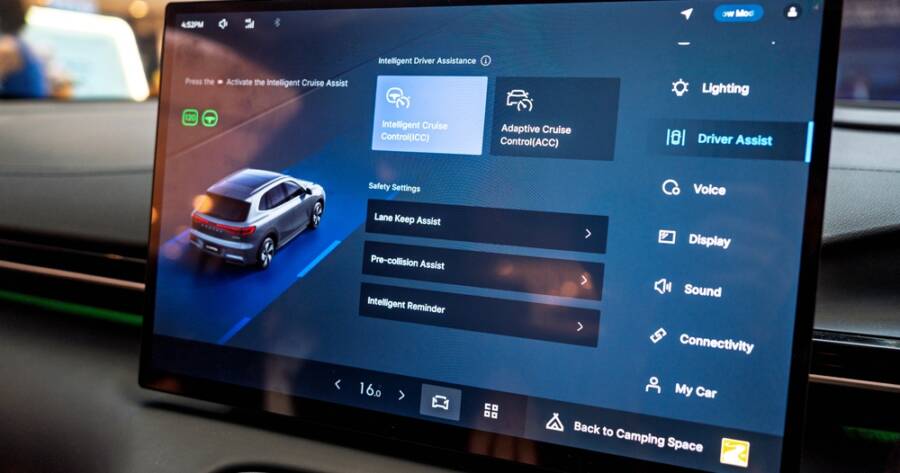
Shopping for a new car isn’t just about horsepower, fuel economy, or a comfortable interior. Modern vehicles offer safety technology that can help drivers recognize hazards, avoid collisions, and protect passengers when accidents happen. However, not every feature delivers the same benefits, and some are more useful than others depending on your driving habits. Knowing which technologies deserve your attention can help you choose a vehicle that offers meaningful protection without paying for unnecessary extras.
Automatic Emergency Braking Can Help Prevent Collisions
Automatic emergency braking (AEB) is one of the most valuable safety features to prioritize when shopping for a vehicle. The system uses sensors or cameras to detect potential frontal collisions. If the driver doesn’t respond quickly enough, it can automatically apply the brakes to help avoid a crash or reduce its severity.
Look for systems that detect both vehicles and pedestrians, including in low-light conditions. Some vehicles also offer cyclist detection or automatic braking when reversing. However, performance varies between models, and poor weather or obstructed sensors can limit effectiveness. The Insurance Institute for Highway Safety (IIHS) has found that front crash prevention systems can significantly reduce certain types of crashes, making independent test results worth checking before buying.
Blind-Spot Monitoring Makes Lane Changes Safer
Blind-spot monitoring helps drivers recognize vehicles traveling alongside them that may be difficult to see in mirrors. When another vehicle enters a monitored area, a warning light typically appears in the side mirror. Some systems also provide an audible alert if the driver activates a turn signal while another vehicle is nearby.
More advanced versions can actively assist with steering or braking when a potentially dangerous lane change is detected. The feature is especially helpful on busy highways, during daily commutes, and in vehicles with limited rearward visibility. Still, blind-spot monitoring doesn’t replace properly adjusted mirrors or shoulder checks. When comparing vehicles, look for clear warning indicators and reliable detection rather than assuming every manufacturer’s system performs identically.
Adaptive Cruise Control Reduces Highway Driving Stress
Traditional cruise control maintains a selected speed, while adaptive cruise control adjusts vehicle speed to maintain a preset following distance from traffic ahead. When another vehicle slows down, the system can reduce speed automatically. Depending on the model, it may also bring the car to a complete stop and resume moving when traffic begins flowing again.
Adaptive cruise control is particularly useful for drivers who spend considerable time on highways or in stop-and-go traffic. However, it’s primarily a convenience and driver-assistance feature, not a substitute for attentive driving. Drivers must remain prepared to brake or steer whenever necessary. If highway travel is part of your routine, test how smoothly the system responds to changing traffic conditions before deciding whether it’s worth paying extra.
Lane Departure Warning and Lane-Keeping Assistance
Lane departure warning alerts drivers when their vehicle begins drifting out of a marked lane without signaling. Lane-keeping assistance goes further by applying gentle steering corrections to help keep the vehicle within its lane. Some cars also offer lane-centering assistance, which continuously helps maintain position between lane markings when conditions allow.
The distinction matters because different systems provide different levels of assistance. Lane departure warning only alerts the driver, while lane-keeping technology can intervene. Effectiveness also depends on visible road markings, weather, and system design. According to the National Highway Traffic Safety Administration (NHTSA), lane departure warning and lane-keeping assistance are separate technologies with different capabilities. Buyers should understand exactly what their chosen vehicle includes rather than relying on broad marketing terms.
Rear Cross-Traffic Alerts and Automatic Braking
Backing out of a crowded parking space can be challenging, especially when larger vehicles block your view. Rear cross-traffic alerts warn you when another vehicle approaches from either side while you’re reversing. Rear automatic braking offers additional protection by applying the brakes when the system detects a possible collision behind your vehicle.
Both features are particularly helpful in parking lots, busy driveways, and vehicles with limited rear visibility. IIHS research has linked rear automatic braking, combined with parking sensors and a rearview camera, to substantial reductions in backing crashes. When comparing vehicles, check whether rear cross-traffic alerts and automatic braking are included together. A backup camera alone doesn’t necessarily provide either function.
Better Headlights and Automatic High Beams
Good headlights deserve just as much attention as cameras and collision sensors. Strong nighttime visibility helps drivers recognize curves, pedestrians, animals, and obstacles earlier. Automatic high beams can switch between high and low beams based on surrounding traffic, reducing the need to adjust them manually. Some vehicles also offer adaptive lighting that adjusts illumination for different driving conditions.
Don’t assume expensive LED headlights automatically deliver better visibility. IIHS evaluates headlight performance based on illumination and glare rather than bulb technology alone. If you frequently drive at night or on poorly illuminated roads, check the headlight ratings for the specific vehicle and trim you’re considering. Better visibility may provide more practical value than an elaborate infotainment package.
Crash-Test Ratings and Passenger Protection
Advanced technology can help prevent collisions, but a vehicle still needs to protect its occupants when an accident occurs. Look beyond driver-assistance features and compare crash-test performance, seat belt systems, airbags, and structural protection. Families should also consider child-seat compatibility and how easily car seats can be installed in the rear seating positions.
IIHS evaluates both crashworthiness and crash avoidance, helping shoppers compare how vehicles protect occupants and reduce collision risks. NHTSA also provides vehicle safety ratings that can help inform purchasing decisions. Check the exact model year rather than assuming every generation performs identically. A vehicle with excellent crash protection and effective collision-prevention technology offers a more complete approach to safety than one relying on electronic features alone.
Which Safety Features Should You Prioritize?
Not every driver needs the same equipment. Someone commuting through heavy traffic may value blind-spot monitoring and automatic emergency braking, while a driver regularly traveling on dark rural roads might prioritize excellent headlights. Families may place additional importance on rear automatic braking, crash-test performance, and rear-seat protection.
Use the comparison below to identify which technologies deserve attention during your search.
| Safety Feature | Main Benefit | Particularly Useful For |
|---|---|---|
| Automatic emergency braking | Helps avoid or reduce frontal collisions | Nearly all drivers |
| Pedestrian detection | Helps identify pedestrians and may apply braking | City and suburban driving |
| Blind-spot monitoring | Warns about vehicles in adjacent lanes | Highway commuters |
| Adaptive cruise control | Maintains a selected following distance | Frequent highway travelers |
| Lane-keeping assistance | Helps prevent unintended lane departures | Highway driving |
| Rear cross-traffic alert | Warns about approaching traffic while reversing | Parking lots and driveways |
| Rear automatic braking | Helps prevent certain reversing collisions | Families and urban drivers |
| Automatic high beams | Adjusts high beams based on traffic | Nighttime driving |
| Strong crash-test ratings | Indicates tested occupant protection and crash avoidance | Every vehicle shopper |
When comparing trim levels, verify which features are standard and which require additional packages. Two vehicles with similar prices may offer very different safety equipment. It’s also worth checking independent evaluations rather than relying entirely on manufacturer descriptions.
Make Safety a Priority, Not an Afterthought
The best car safety features aren’t necessarily the most expensive or technologically impressive. They’re the ones that address real driving risks and work reliably when needed. Automatic emergency braking, blind-spot monitoring, rear collision prevention, and effective headlights are particularly worthwhile features to investigate, especially when supported by strong independent test results.
Before purchasing, compare crash-test ratings, review the safety equipment included with each trim, and ask for a demonstration during your test drive. Remember that even advanced driver-assistance systems have limitations and can’t replace an attentive driver. Choosing a vehicle with well-designed safety technology and strong crash protection can help you feel more confident every time you get behind the wheel.